Be yourself; Everyone else is already taken.
— Oscar Wilde.
This is the first post on my new blog. I’m just getting this new blog going, so stay tuned for more. Subscribe below to get notified when I post new updates.
Be yourself; Everyone else is already taken.
— Oscar Wilde.
This is the first post on my new blog. I’m just getting this new blog going, so stay tuned for more. Subscribe below to get notified when I post new updates.
dnp 711 spring 2020 syllabus-20200109
In Arizona, cigarettes are subject to a state excise tax of $2.00 per pack. Cigarattes are also subject to Arizona sales tax of approximately $0.37 per pack. Cigarettes excise tax rate has not been changed in over a decade in AZ. With tobacco use on the rise, lawmakers ask voters to sharply increase the taxes smokers pay on cigarettes and similar products they buy. A further increase in the cost per pack will prevent teens to start the habit or give up the habit (1).
The process of policy making has mistakes of omission and commission. Policy modification phase helps to adjust to accommodate changing circumstances. Incrementalism in public policymaking is the method of change by which many small policy changes are enacted over time in order to create a larger broad based policy change. There were large scale policy modifications like Medicare enactment and healthcare reform during Obama administration. However, pattern of incrementalism is likely to continue like getting to universal health insurance coverage by filling the gaps in existing system (2). Incrementalism is a significant strategy to attain sustainable results. Sustaining an innovation is only through creating an interest among key legislators, stakeholders, and decision makers. Strategies for sustainability include maintaining contacts with key leaders, sending newsletters or updates and developing press releases on the topic (3).
According to the report of the Surgeon General of United States “use of e-cigarettes is increasing rapidly among young people, even among those who have never smoked cigarettes”. His Call to Action presents strategies to reduce e-cigarette use among youth and young adults. It is vital to work in unity with individuals and families; civic and community leaders; public health and health care professionals; e-cigarette manufacturers and retailers; voluntary health agencies; researchers; and other stakeholders (4). The strategies are as follows:
A) Implement a comprehensive strategy to address e-cigarettes that will avoid adverse consequences and give careful consideration to the risks for youth and young adults. This can be done by including e-cigarettes in policies and programs related to conventional cigarette smoking at the national, state, local, tribal, and territorial levels.
B) Educate parents, teachers, coaches, and other influencers of youth about the risks of e-cigarette use among youth and young adults. Educate health professionals about the risks of e-cigarette use among youth and young adults.
C) Implement FDA regulatory authority over the manufacturing, marketing, and distribution of e-cigarettes. Reinforce other federal agencies as they implement programs and policies to address e-cigarettes.
D) State, local, tribal, and territorial governments should implement population-level strategies to reduce e-cigarette use among youth and young adults, such as including e-cigarettes in smoke-free indoor air policies, restricting youth access to e-cigarettes in retail settings, licensing retailers, and establishing specific package requirements. Coordinate, evaluate, and share best practices from state and local entities that have implemented programs and policies to address e-cigarette use among youth and young adults.
E) Curb e-cigarette advertising and marketing that are likely to attract youth and young adults. Urge the e-cigarette companies to stop advertising and marketing that encourages and glamorizes e-cigarette use among youth and young adults.
F) Improve the quality, timeliness, and scope of e-cigarette surveillance, research, and evaluation. Address surveillance, research, and evaluation gaps related to e-cigarettes.
Applying these strategies and continue to apply it to e-cigarettes and other tobacco products to sustain the innovation. Strong state-based public health programs focused on preventing smoking and tobacco use are critical to the nation’s health. CDC is the only federal agency that provides funding to help support states for tobacco control efforts (5).
References
1) Arizona: Tobacco excise taxes. (2020). Retrieved from https://www.salestaxhandbook.com/arizona/tobacco
2) Longest, B. B. (2016). Health policymaking in the United States (6th ed.). Health Administration Press.
3) Patton R.M., Zalon, M.L., & Ludwick, R. (2015). Nurses making policy: From bedside to boardroom. New York: Springer.
4) E-cigarette Use Among Youth and young adults (2016). A report of the surgeon general. Retrieved from https://ecigarettes.surgeongeneral.gov/documents/2016_SGR_Full_Report_non-508.pdf
5) Centers of disease control and prevention. (2020).Smoking and tobacco use. Retrieved from https://www.cdc.gov/tobacco/about/foa/index.htm
Technology has the opportunity to enforce value-based healthcare system to deliver high quality care at a better cost. Technology also allows data collection to evaluate the patient outcome. Some challenges with healthcare technology are lack of sustainability due to lack of evaluation in time. Other risks include noncompliance with data protection policies, inadequate data governance, and over expectations from new technologies (1).
Evolution in the vaping technology has therapeutic qualities in the medical field that can be used in diseases like cancer (2). The recent researches have brought out some development in the use of medical marijuana with the aid of vaping. Through technology it is proven that different medicinal drugs could be inhaled as vapers that flow through the bloodstream and reach the lungs to fulfill the set purpose. Numerous changes are taking place in the field of technology that is bringing simultaneous changes in the vaping world as well.
Technology is growing at an exponential rate in the current world. Electronic devices are becoming smaller and more intelligent, and this is apparent in vaping as well. The traditional modern e-cigarette invention has led the e-cigarette industry into a multi-billion-dollar market. Then vaping evolve into a technologically-challenging business in which companies are competing to release the most advanced products possible (3).
Vape manufacturing and designing have risen significantly along with technological expansion. Technology ranges from touch screen capabilities and miniature PCBs (Printed Circuit Boards), to Bluetooth Geofencing which aims to combat minors’ vaping, Teens are clearly attracted to the marketable technology and flavorings seen in vaping devices. Juul’s latest report says that it is trying to control its users by collecting personal data to verify that a user is legally allowed to use its products. Juul C1 is a blue tooth enabled device that helps to monitor pull count, lock the device, and locate the device through a paired mobile app. But the users need to go through many privacy screening to access the app (4).

As per Juul they are continuing to innovate and refine the features and functionalities of the app, to give adult smokers the opportunity to manage consumption of nicotine by providing them with options and tools to control their usage. At the same time, they are committed to restrict youth from accessing their products. (4). According to the company the usage data it collects on its users is de-identified and is not stored with their names. Data is securely stored using a randomized identifier that it assigns to a user’s phone and the identifier is not linked with personal information.
References
1) BMC Medical Informatics and Decision Making(2018). Weighing benefits and risks in aspectsof security, privacy and adoption oftechnology in a value-based healthcare system. Retrievd from https://bmcmedinformdecismak.biomedcentral.com/articles/10.1186/s12911-018-0700-0
2) Healthcare in America.(2018). How Technology Has Changed The Face of Vaping World. Retrieved from https://healthcareinamerica.us/ways-how-technology-has-changed-the-face-of-vaping-world-144fd6fdfe96
3) TMCNET Feature. (2019). Smart vaping – how e-cigarette technology is rapidly evolving Retrieved from https://www.tmcnet.com/topics/articles/2019/09/16/443252-smart-vaping-how-e-cigarette-technology-rapidly-evolving.htm
4) GIZMODO. (2019). Juul’s new e-cig sure is collecting a dumb amount of data about its users. Retrieved from https://gizmodo.com/juuls-new-e-cig-sure-is-collecting-a-dumb-amount-of-dat-1836971857
The private sector also plays a vital role in shaping public policy, just like the public sector, which we saw in the previous blog. Many factors influence and shape public policy and one of the key influences is the private sector. The private sector is a crucial stakeholder in both urban and economic development, being a significant contributor to national income and the principal job creator and employer (1). The private sector influences public policy through knowledge sharing, campaign contributions, and lobbying efforts (2).
The private sector both directly and indirectly influences the elected officials through the information shared. However, some argue that by partnering with the private sector, the public official is influenced and even forced to create public policy that is favorable to the private sector actors. Financial contributions to campaigns by private sector actors may be indirectly influencing the public sector officials. Lobbying public officials can also be powerful to influence policymaking.
Big tobacco companies like Altria Group, Ballantyne Brands, Hay Island Holding, Reynolds American, and Swedish Match AB, are some examples of private sectors. Centers for Disease Control and Prevention have guidance for collaboration with the private sector. Private companies have approached state and local agencies with proposals to financially support the implementation of prevention programs of vaping(3). Agencies should work together and use existing partnerships with national, state, and local education and health agencies, community-based organizations, universities, and others to fully consider and discuss the positive and negative outcomes that may occur as a result of any proposed partnership(3).
References
1) The role of private sector. (2020). Retrieved from https://gsdrc.org/topic-guides/urban-governance/elements-of-effective-urban-governance/the-role-of-the-private-sector/
2) The influence of the private sector on public policy (2018). Retrieved from https://medium.com/@jeremy.l.strickland/the-influence-of-the-private-sector-on-public-policy-7e570f4a673c
3) Centers for Disease Control and Prevention. (2020). Smoking and tobacco use. Retrieved from https://www.cdc.gov/tobacco/stateandcommunity/tobacco_control_programs/program_development/accepting_funds/index.htm
Public institutions are offices and other entities that constitute local, state, and federal governments. These organizations are funded by tax dollars and operate in the service of the citizens that pay those taxes. The federal government has tried to pass comprehensive healthcare reform in the past from President Roosevelt. It had been not easy due to the complexity, magnitude, and economic concerns in the health care system. The processes by which public policies are created are dynamic, fluid, and loosely connected (4).
Once Congress passes a law, it must be interpreted based on federal rules by the relevant federal agencies. Before a rule can be enacted, a proposed rule must be posted for a period of public comment and written responses made to each comment. A rule is finalized once it goes through the chain of the executive branch of government and a formal process that requires public posting and a formal response to every comment.
During the Presidency of Barack Obama in 2008 Congress passed the Family Smoking Prevention and Tobacco Control Act (TCA), which specifically designate authority for the regulation of tobacco products to the FDA on the premise that adults had the freedom to choose to use tobacco products but minors should not be exposed to an addictive substance. Intense action must be taken to prevent e-cigarettes from addicting a generation of children to nicotine. The manufacturers of e-cigarettes must submit the evidence to FDA if they argue that it helps to quit smoking. It is necessary to ban flavors that put down another generation at risk of nicotine addiction (3).
The following are the current laws in Arizona regarding tobacco/ vaping products (3). It is a petty offense in Arizona to sell, give or furnish tobacco or vapor products to a minor (anyone under the age of 18). Cottonwood and Douglas have passed a Tobacco 21 law, making the legal age to purchase tobacco 21. It is a petty offense for a minor to buy or have in his possession or knowingly accept or receive a tobacco or vapor product from any person. Arizona defines a “vapor product” separately from tobacco as “a noncombustible tobacco-derived product containing nicotine that employs a mechanical heating element, battery or circuit, regardless of shape or size that can be used to heat a liquid nicotine solution contained in cartridges. Vapor product does not include any product that is regulated by the United States Food and drug administration under chapter V of the federal food, drug, and cosmetic act.” The state-wide smoking prohibitions of A.R.S. § 36-601.01 (Smoke-free Arizona) do not apply to vapor products. The following municipalities have ordinances that prohibit vaping where smoking is not permitted (some exclude bars and restaurants): Tempe, Coconino County, and Flagstaff (1).
The Federal law that was passed on December 20, 2019, prohibits sales of all tobacco and vapor products to anyone under the age of 21 years old. FDA stated law became effective on that date. States may choose to continue with current age law at the risk of losing federal funding. Federal law prohibits the sale of closed system devices (pods, cartridges) containing e-liquid in flavors other than tobacco or menthol. Vapor products are not subject to any of the tobacco luxury taxes outlined in A.R.S. title 42, chapter 3(1).
Arizona Attorney General’s office said that reducing youth access to tobacco has been a priority but that it is still reviewing the new law to determine how it will affect the state. Arizona was one of 31 states where the legal age to buy tobacco was 18. However the cities of Tucson, Flagstaff, Goodyear, Douglas, and Cottonwood had raised the age to 21, according to the Campaign for Tobacco-Free Kids (5).
References
1) Arizona laws and taxes. Retrieved from http://www.casaa.org/find-my-state-info/arizona/
2) Arizona revised statutes. Retrieved from https://www.azleg.gov/arsDetail/?title=42
3) H.R. 1256 (111th): Family Smoking Prevention and Tobacco Control Act. Retrieved from https://www.govtrack.us/congress/bills/111/hr1256
4) Kingdon, J. W. (2011). Agendas, Alternatives, and Public Policies, Update Edition (2nd ed.). London: Longman Publishing Group
5) The toll of tobacco in Arizona. Retrieved from https://www.tobaccofreekids.org/problem/toll-us/arizona
6) Tempe vape shop owner reacts to federal ban on certain e-Cigarette products. Retrieved from https://www.fox10phoenix.com/news/tempe-vape-shop-owner-reacts-to-federal-ban-on-certain-ecigarette-products
Health is of high priority for every individual and pursuit of health is of increasing significance to nation’s economy and social justice. President Obama in his first year in office has made health reform believing that improving accessibility, affordability, and quality of healthcare is vital to achieve social justice. Health policy in United States has advanced gradually through modest steps of trustworthy decisions. Policy is what the government says and does about perceived problems. Policy making is how the government decides what will be done about perceived problems. Policy making is a process of interaction among governmental and nongovernmental actors; policy is the outcome of that interaction. Besides government there are non-governmental organizations and industry which affect the policy making platforms. Kingdon(3) discuss that politicians, civil servants, lobbyists, advisors, domain experts, auditors, media and consumers are part of policy making.
The US Food and Drug Administration has officially raised the minimum age to buy tobacco products like cigarettes, electronic cigarettes, and vaping products that contain nicotine from 18 to 21.After President Donald Trump signed the new age limit into law on December 20 as part of a larger government funding bill, the federal agency also released its updated rules around the sale of tobacco and vaping products — expressly prohibiting theirsale to anyone under the age of 21.But its not implemented yet in many states including Arizona and still has some unknowns. FDA still needs to promulgate the rule and how they’re going to implement that,” according to Arizona Attrorney General (2).
During last year’s legislative session, Senator Heather Carter proposed HB 2357 which would have done several good things including classifying vaping products in the same category as tobacco, including vaping products in the Smoke Free Arizona Act, and explicitly allowing cities and towns to impose their own stricter regulations (including having a 21 year old buy age). Sadly, that bill didn’t pass. Senator Carter also proposed SB 1363 last session, which would have moved the tobacco and e-cigarette buy age to 21. Sadly, that bill never even received a hearing.
Currently it is the 2020 legislative session and its show time for public health legislative advocacy. Over the coming weeks and months, our Arizona elected officials are influencing to make evidence-based public health policy decisions. Public opinion can influence policy making negatively and positively. Lobbyist plays an important role in giving information to policy makers and also can assist them (2). When communities get involved in certain issues, the actors on the policy making platform can get the attention of the government to make a policy come true.
References
1) Lawmaker warns against bill pushed by vaping industry – Arizona Capitol Times. (n.d.). Retrieved February 16, 2020, from https://azcapitoltimes.com/news/2019/04/29/lawmaker-warns-against-bill-pushed-by-vaping-industry/
2) Longest, B. B.Jr. (2010) Health policy making in United States (5th ed). Chicago, IL: Health Administration Press.
3) Kingdon, J.W. (2011). Agendas, alternatives, and public policies.(2nd ed.). Glenview, IL: Pearson Education Inc.
The word ethics comes from the Greek word “ethos,” which means character. Ethical values are universal rules of conduct that provide a practical basis for identifying what kinds of actions, intentions, and motives are valued (1).
Ethical considerations shape and guide the development of new policies. In the political market where policymaking occurs, ethical behaviors guided by four major philosophical principles. These principles are respect for the autonomy of other people, justice, beneficence, nonmaleficence(2).
Respect for autonomy is explained in different ways by Beaufort Longest in his book “Health Policymaking in the United States.” In healthcare, the individual has the freedom to make decisions for their medical care and has the right to refuse or accept the prescribed treatment. Other elements included in autonomy are confidentiality and fidelity. The principle of justice well explained through an egalitarian perspective, libertarian perspective, and utilitarian perspective. The principle of beneficence guides policymakers to decisions that maximize the net benefits and balance benefits and burdens of their choices. The principle of nonmaleficence helps to make decisions that minimize harm (2).
The government has an ethical obligation to pass laws and regulations that protect its citizens from harm and promote their welfare. Food and Drug Administration (FDA) have been established to execute this goal, but there is much dispute about electronic nicotine delivery systems like vaping, Juuling or using e-cigarettes. Through the Tobacco Control Act of 2009 FDA has the legal authority to regulate the manufacture, distribution, and marketing of tobacco products. In 2016 the FDA, through The Center for Tobacco Products (CTP), part of the FDA initiates regulation of electronic nicotine delivery systems. “Safe and effective,” standard by FDA for medical products, does not apply to tobacco products.
Beyond the unknown long-term effects of electronic nicotine delivery systems, the concern is that addicting minors to nicotine will result in an increased risk of using combustible products. Nicotine affects the adolescent brain by disrupting circuits that control attention, learning, and susceptibility to addiction. Thus, the urgency in regulating the electronic nicotine delivery system focused on preventing youth from addiction to nicotine, which can be intrinsically harmful but also can lead to the use of combustible tobacco products.
There is an outcry from school officials about vaping devices, which have become too common among teenagers. Public health advocates and lawmakers launched an effort to raise the age of vaping and smoking to 21 across Arizona.
References
1) Haddad, L. M., & Geiger, R.A.(2019). Nursing Ethical Considerations. Retrieved from https://www.ncbi.nlm.nih.gov/books/NBK526054/
2) Longest, B. B. (2016). Health policymaking in the United States (5th ed.). Health Administration Press.
3) Binkley, C. E., & Kemp, D.S.(2019). Can the FDA regulate vaping as an ethical alternative to tobacco cigarettes? Retrieved from https://verdict.justia.com/2019/09/09/can-the-fda-regulate-vaping-as-an-ethical-alternative-to-tobacco-cigarettes
WEEK 1
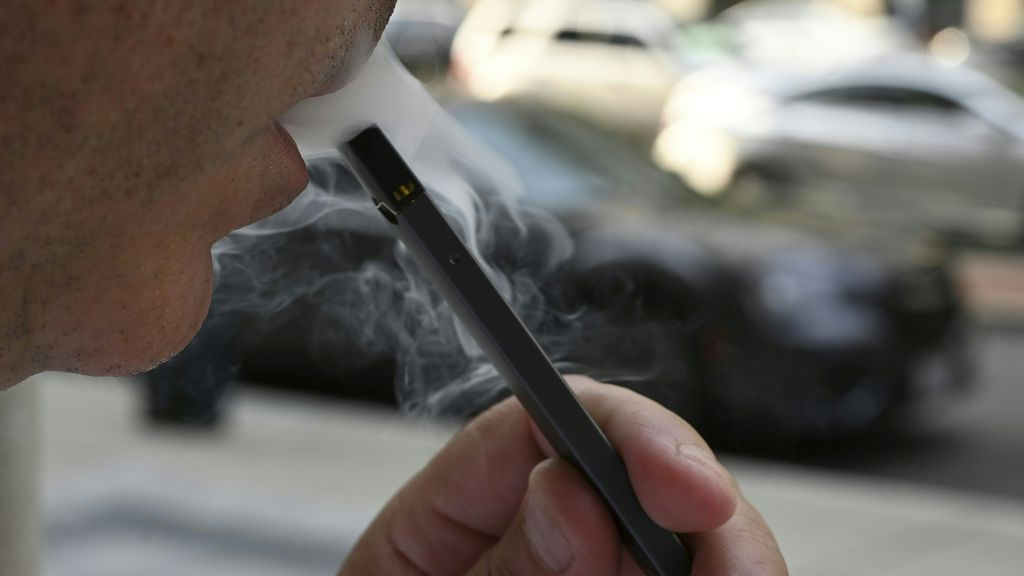
Vaping has become one of the most popular means of smoking especially among teens. A recent study shows a dramatic increase in vaping in 2018 when compared to 2017(from 28% to 37%) among high school children(NIH,2019).It looks safe and lots of teens are jumping on the bandwagon of this trend but with very little education. Majority of them think that it is just a harmless steam and flavor. It is quite a misconception, where in fact one Juul pod contains as much nicotine as one whole packet of cigarettes. Vaping is easy to hide since it does not leave the divulging scent as that of tobacco and its harmful effect of addiction. It may seem jovial in the beginning stages but can eventually turn into an addictive and destructive habit. It contains carcinogenic ingredients such as lead, tin and solvents. It can cause severe lung injuries which can become life threatening. Sweet flavors cannot hide the danger behind vaping.
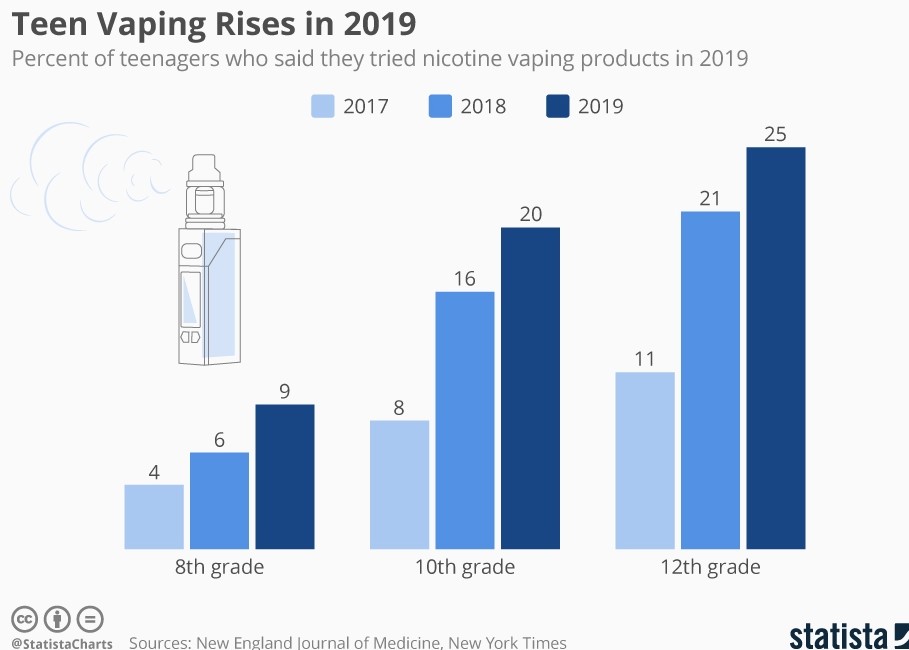
Vaping is a serious public health issue which needs to be addressed at the earliest. It is vital for me to address this major issue , especially as an Arizonian who has teenage children and also as a health professional in training who wants my community to be healthy. As a mental health provider in training, I think it is necessary to look into the root cause of vaping as well. It may be depression or stress that leads teens to such harmful addictions. Educators are saying that some students wouldn’t drink any liquid during school day so they wouldn’t have to use the bathroom fearing that someone would be vaping and they would be suspected. Teenagers think smoking cigarettes is extremely distasteful but do not understand that vaping, although considered trendy with enticing & numerous flavors, is even more dangerous than smoking a cigarette. Fortunately many authoritative entities like lawmakers are pushing and making an effort to treat vaping products as tobacco and to raise the legal age of tobacco smoking to 21. Opportunities for such policies and legislation need to be enacted in order to protect this generation and the ones to come. Children are like buds in a garden and should be carefully and lovingly nurtured, as they are the future of this nation.
E-cigarette manufacturers have had the opportunity since 2007 to apply to the FDA’s Center for Drug Evaluation and Research or its Center for Devices and Radiological Health for clearance of e-cigarettes for therapeutic purposes, such as potential use for smoking cessation (U.S.NEWS, 2019).
Sen. Heather Carter announced that she’ll once again push a measure to raise the legal age at which someone is allowed to smoke tobacco to 21. And by amending state law to treat vaping products like tobacco, the same legal age would apply to vaping products, which educators say have become dangerously popular among school-age children.

Centers for Disease Control and Prevention. (2020). Outbreak of lung injury associated with the use of e-cigarattes, or vaping products. Retrieved from https://www.cdc.gov/tobacco/basic_information/e-cigarettes/severe-lung-disease.html
Shmerling, R. H.(2019).Can vaping damage your lungs? Retrieved from https://www.health.harvard.edu/blog/can-vaping-damage-your-lungs-what-we-do-and-dont-know-2019090417734
Vaping rises among teens (2019). Retrieved from https://newsinhealth.nih.gov/2019/02/vaping-rises-among-teens
Vaping and e-cigarattes: The new public health problem (2019). Retrieved from https://www.usnews.com/news/healthiest-communities/articles/2019-09-30/vaping-and-e-cigarettes-a-new-public-health-problem
This is an example post, originally published as part of Blogging University. Enroll in one of our ten programs, and start your blog right.
You’re going to publish a post today. Don’t worry about how your blog looks. Don’t worry if you haven’t given it a name yet, or you’re feeling overwhelmed. Just click the “New Post” button, and tell us why you’re here.
Why do this?
The post can be short or long, a personal intro to your life or a bloggy mission statement, a manifesto for the future or a simple outline of your the types of things you hope to publish.
To help you get started, here are a few questions:
You’re not locked into any of this; one of the wonderful things about blogs is how they constantly evolve as we learn, grow, and interact with one another — but it’s good to know where and why you started, and articulating your goals may just give you a few other post ideas.
Can’t think how to get started? Just write the first thing that pops into your head. Anne Lamott, author of a book on writing we love, says that you need to give yourself permission to write a “crappy first draft”. Anne makes a great point — just start writing, and worry about editing it later.
When you’re ready to publish, give your post three to five tags that describe your blog’s focus — writing, photography, fiction, parenting, food, cars, movies, sports, whatever. These tags will help others who care about your topics find you in the Reader. Make sure one of the tags is “zerotohero,” so other new bloggers can find you, too.

 Annie's Blog